Visiting a casino in Asia can feel very different from visiting one in Las Vegas or Europe. From entry rules and cultural norms to gaming preferences and etiquette, the experience varies by country but there are some common themes travelers should understand before stepping onto the gaming floor.
This guide explains what to expect when visiting a casino in Asia, especially if it’s your first time.
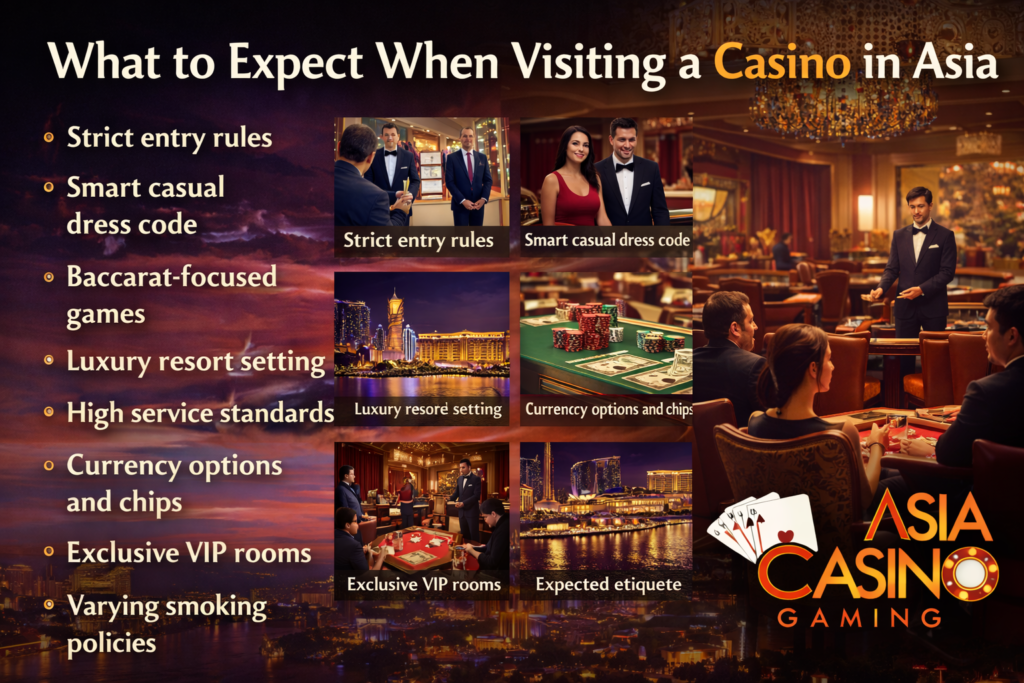
1. Entry Rules Are Strict (But Clear)
Asian casinos take entry regulations seriously.
What you’ll usually need:
- A valid passport (physical copy, not digital)
- Minimum age compliance (typically 21)
- Compliance with local dress and conduct rules
In some countries:
- Foreigners enter freely
- Locals may face restrictions or entry fees
Security checks are normal and should be expected.
2. Dress Code: Smart Casual Is the Safe Choice
Most Asian casinos don’t require formal attire, but appearance matters.
Generally acceptable
- Smart casual clothing
- Closed shoes
- Clean, well presented outfits
Avoid
- Flip flops
- Beachwear
- Sleeveless tops (in some locations)
VIP areas may enforce stricter dress standards.
3. Baccarat Dominates the Gaming Floor
While you’ll find familiar games like blackjack, roulette, and slots, baccarat is king in most Asian casinos.
Common observations:
- Baccarat tables often occupy the largest floor space
- High limit baccarat rooms are common
- Game pace can be faster than in Western casinos
Slots are popular in tourist focused destinations like Singapore and the Philippines.
4. Service Levels Are Extremely High
One of the biggest surprises for visitors is the quality of service.
Expect:
- Attentive floor staff
- Professional dealers
- Multilingual support (English is widely spoken in major casinos)
In VIP areas, service becomes highly personalized with dedicated hosts.
5. Casinos Are Part of Bigger Resorts
In Asia, casinos are rarely standalone venues.
Most are part of:
- Luxury hotels
- Shopping malls
- Fine dining districts
- Entertainment complexes
This means non gamblers can still enjoy the destination, making casinos ideal for mixed travel groups.
6. Currency, Chips, and Payments
Things to know:
- Chips are purchased directly at tables or cashier counters
- Some casinos accept multiple currencies
- Cash is still king, but electronic options are expanding
Always confirm chip exchange rules before leaving the casino floor.
7. VIP Areas Are Common (and Separate)
Asian casinos place strong emphasis on VIP gaming.
VIP sections typically feature:
- Private or semi private rooms
- Higher betting limits
- Faster service and quieter environments
Access may require:
- Invitation
- Host approval
- Minimum betting thresholds
8. Behavior and Etiquette Matter
Asian casino culture values respect and discretion.
Good etiquette includes:
- Keeping emotions controlled
- Avoiding loud celebrations or frustration
- Respecting dealers and staff
Phones may be restricted at tables, especially in VIP areas.
9. Smoking Policies Vary
Smoking rules differ by country and casino:
- Some casinos allow smoking in designated areas
- Others enforce strict non-smoking policies
Always follow posted signage and staff instructions.
10. Gambling Is Treated as Entertainment, Not a Spectacle
Asian casinos are generally:
- More focused
- Less theatrical
- More discreet
This creates a calmer, more serious atmosphere especially in high limit rooms.
Final Thoughts
Visiting a casino in Asia is less about spectacle and more about experience, service, and structure. With clear rules, high standards, and integrated resort environments, Asian casinos are designed to be comfortable, efficient, and welcoming especially for international travelers.
Understanding what to expect before you go ensures a smoother, more enjoyable experience, whether you’re visiting for casual play, luxury travel, or VIP gaming.