
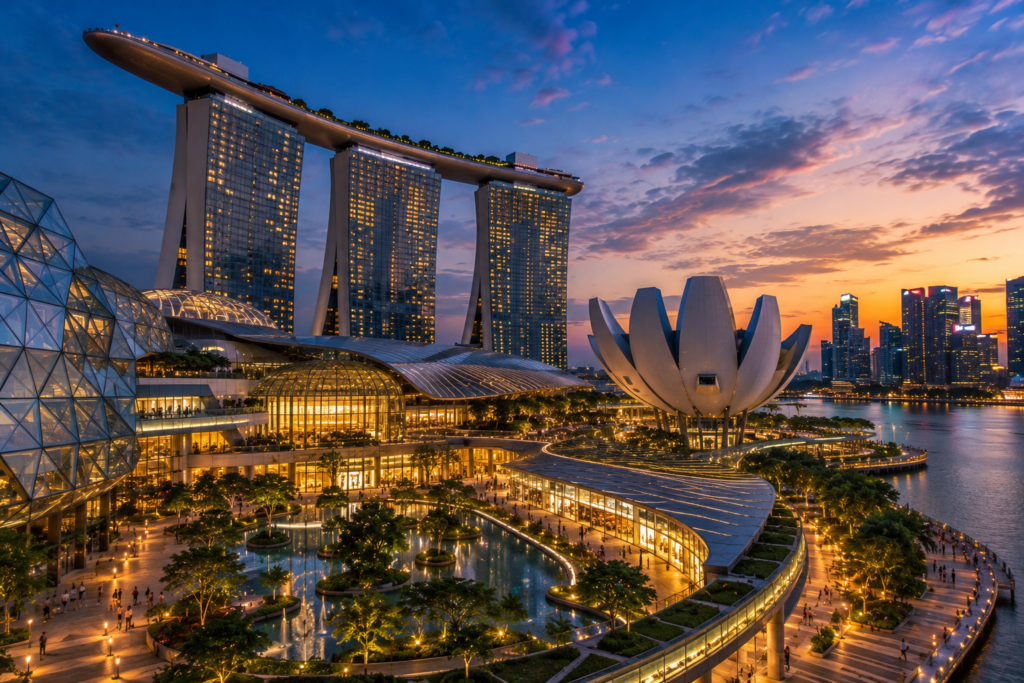
The world’s most recognisable integrated resorts are remembered long before visitors recall the details of their itinerary. A distinctive skyline, a dramatic waterfront, a beautifully designed hotel lobby or an expansive public garden can become the defining image of an entire destination. Across Asia, architecture has played a central role in transforming integrated resorts into landmarks that contribute to tourism, hospitality and urban identity. Rather than creating buildings that simply house hotels or entertainment facilities, developers have increasingly focused on designing places that offer memorable experiences while reflecting the character of their surroundings.
Architecture as a Tourism Asset
Exceptional architecture attracts attention long before a traveller books a flight. Iconic buildings regularly appear in travel guides, photography, documentaries and social media, becoming visual ambassadors for their destinations. In many cases, the architecture itself becomes one of the attractions visitors wish to experience.
From Individual Buildings to Integrated Districts
Modern integrated resorts are carefully planned environments rather than standalone hotels. Accommodation, restaurants, retail, convention facilities, theatres, landscaped gardens and public spaces are arranged to encourage exploration on foot while maintaining strong links with surrounding transport networks and nearby attractions.
Blending Contemporary Design with Local Identity
The most successful developments avoid feeling disconnected from their location. Designers often draw inspiration from local materials, climate, culture and history, incorporating regional influences into façades, interior spaces, artwork and landscape design. This approach helps visitors experience a destination that feels authentic rather than interchangeable.
Engineering on a Grand Scale
Large-span roofs, waterfront construction, complex structural systems and advanced building technologies have enabled architects and engineers to create some of Asia’s most recognisable skylines. These projects demonstrate how engineering innovation and architectural vision frequently work together to deliver spaces that are both practical and visually distinctive.
Designing for the Guest Experience
Successful hospitality architecture considers how visitors move through a destination. Natural light, intuitive wayfinding, welcoming public areas, green spaces, panoramic views and thoughtfully designed communal areas all contribute to comfort and encourage guests to spend more time enjoying the wider destination.
Sustainability and the Future
Environmental performance has become an increasingly important consideration. New developments are placing greater emphasis on energy efficiency, water management, biodiversity, responsible material selection and operational efficiency. While approaches differ between projects, sustainable design is becoming an essential part of long-term destination planning.
Looking Ahead
As expectations evolve, architecture will continue to shape how integrated resorts are experienced. Future developments are likely to combine innovative engineering, digital technology, flexible public spaces and stronger connections with local communities, ensuring these destinations remain attractive to leisure travellers, business visitors and families alike.
Conclusion
Architecture is far more than an aesthetic feature of Asia’s integrated resorts. It influences visitor perception, supports tourism, strengthens destination branding and contributes to wider urban development. The most enduring projects succeed because they balance ambitious design with functionality, hospitality and a clear sense of place. As integrated resorts continue to evolve, thoughtful architecture will remain one of the defining elements that distinguishes exceptional destinations from ordinary ones.
Suggested SEO Metadata
Meta Title: Architecture That Defines Asia’s Iconic Integrated Resorts | Asia Casino Gaming
Meta Description: Discover how architecture has transformed Asia’s integrated resorts into globally recognised destinations, blending hospitality, engineering, culture and tourism.
Suggested Internal Links
- The Evolution of Integrated Resorts in Asia
- A Traveller’s Guide to Casino Destinations Across Asia
- Luxury Hotels Within Asia’s Integrated Resorts
- Responsible Gaming Across Asia
Editorial Note
This article is intended for general informational purposes. References to integrated resorts relate to their architectural, tourism and hospitality significance. Local laws governing gaming and resort operations vary between jurisdictions and should always be consulted before travelling.